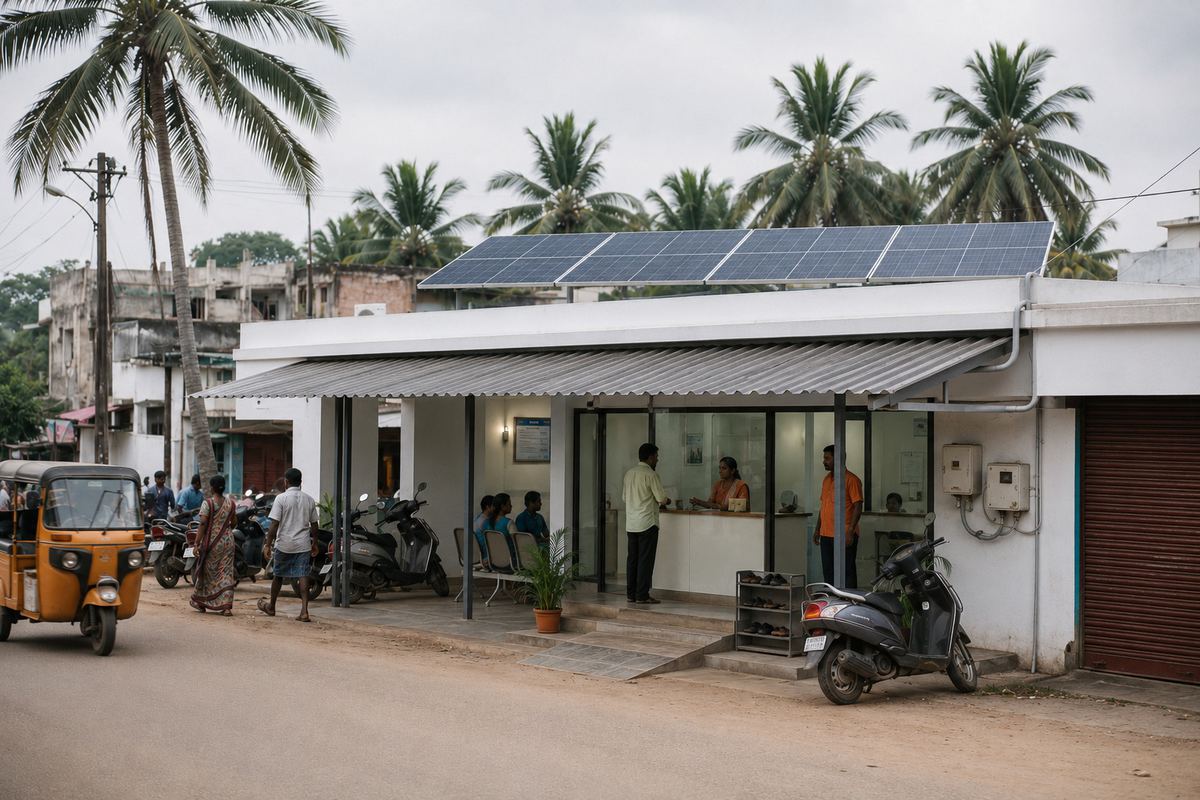
Case Study: How a Rajahmundry Poultry Farm Cut Its Power Bill by 90% with a 120 kW Rooftop System
14 August 20264 min readBy Shanmukh
- Case Study
- Industrial Solar
- Payback Period
- ROI
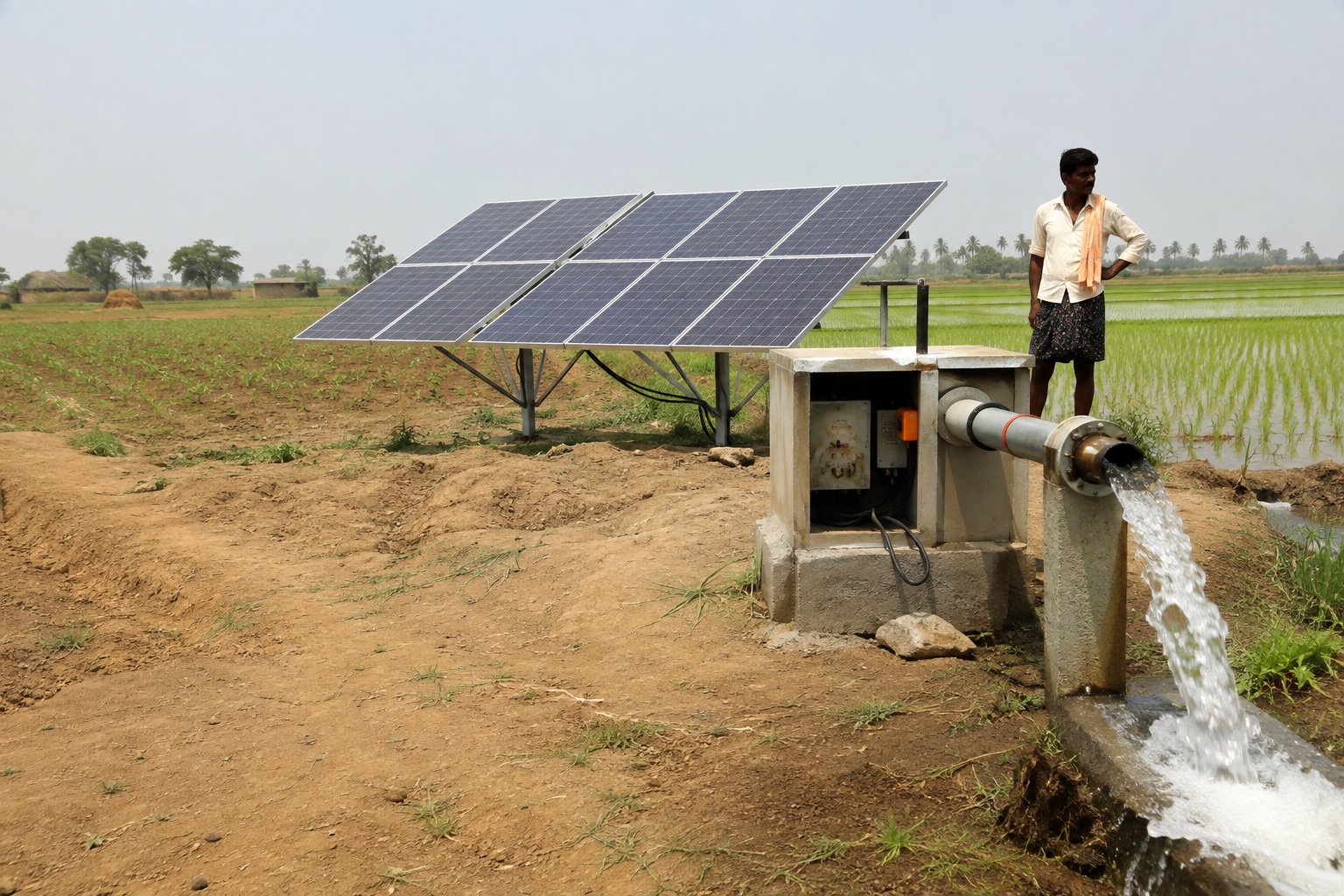
A closer look at the numbers behind one of our largest industrial installs — from a ₹1.4L monthly power bill to a system that pays for itself in under four years.
Industrial and agricultural power bills rarely get talked about in blog posts, because they’re less relatable than a household bill — but they’re where solar’s payback math looks best. This is one of our larger installs: a poultry farm on the outskirts of Rajahmundry running climate-controlled sheds around the clock.
The Problem: A ₹1.4 Lakh Monthly Power Bill
Climate-controlled poultry sheds run exhaust fans, coolers, and lighting continuously, which means the load doesn’t taper off at night the way a typical commercial connection does. The farm’s monthly grid bill was consistently landing above ₹1.4 lakh, with no real way to reduce consumption without compromising bird welfare and yield.
Sizing the System Around Actual Load, Not Roof Space
The shed roofs had more than enough area for a much larger system, but we sized the install against 12 months of actual consumption data rather than maximum roof coverage — oversizing a system beyond what the connection and load profile can use just adds cost without adding usable savings.
Installation, in Numbers
- System size: 120 kW rooftop, ground-mounted supplementary array
- Panels: Waaree, monocrystalline
- Inverter: three-phase, industrial-grade
- Installation window: 3 weeks, including net-metering paperwork
The Results After One Year
The farm’s grid draw dropped to a small fraction of its previous bill — close to a 90% reduction in what it pays the DISCOM in an average month, with the shortfall covered by grid import only during low-generation stretches. At the pre-installation bill level, the system is on track to fully pay for itself in under four years, with roughly two decades of warranty-backed generation left after that.
What We’d Do Differently
In hindsight, we’d have proposed the ground-mounted supplementary array earlier in the conversation instead of as a mid-project addition — it would have simplified the wiring layout and shaved a few days off the timeline. It’s a small thing, but it’s exactly the kind of detail that gets easier to spot on our third or fourth industrial install of a given shed layout.